
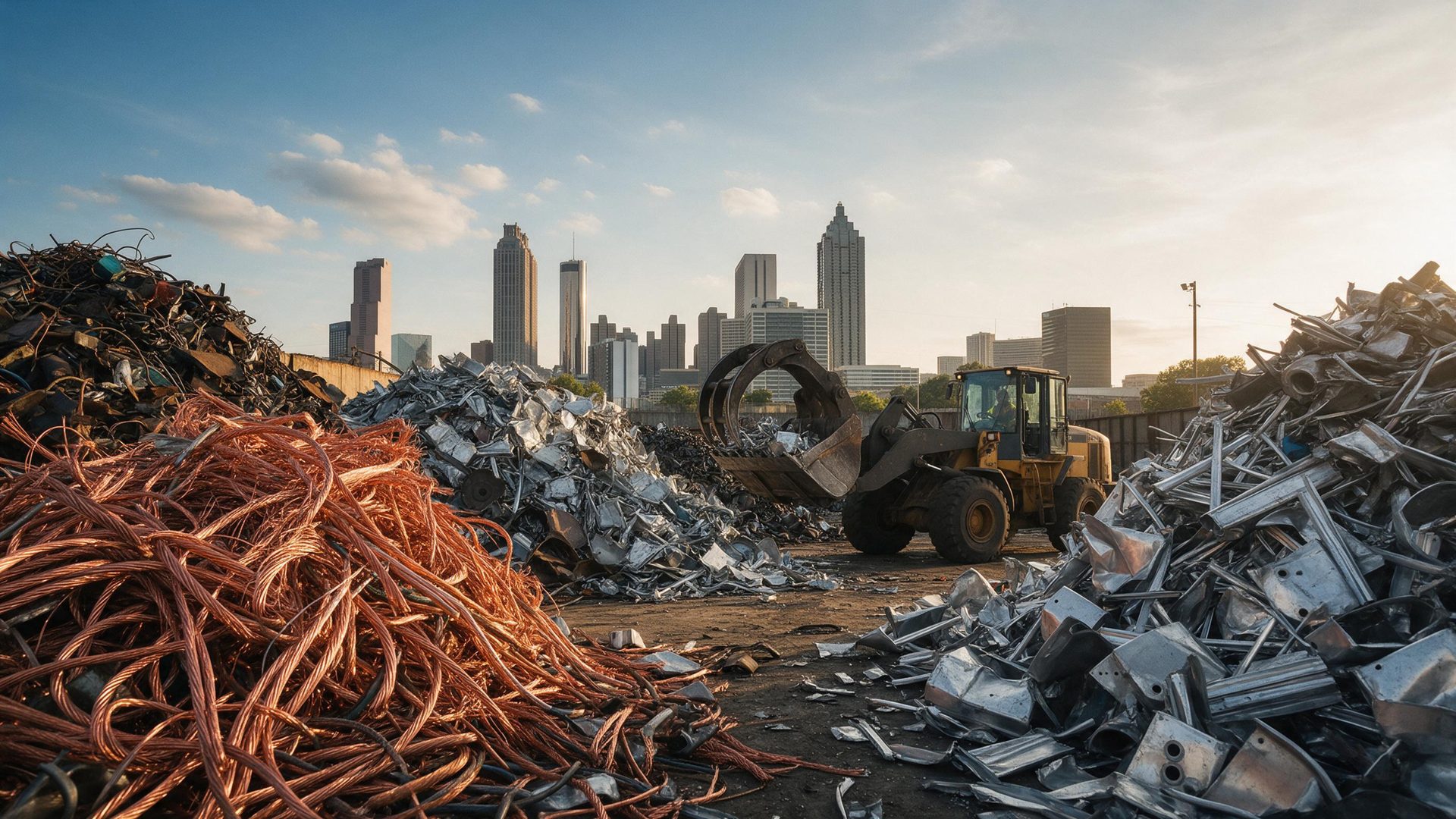
Smyrna sits between older streets and the Cumberland builds
Smyrna’s residential side still remodels mid-century and later houses: copper, appliances, and the occasional car that lost its spot when a household added a third driver. Toward Cumberland, commercial refreshes add cable and light steel on an office calendar.
The Battery-area construction is date-driven and not a household call. If your pile is there, say who authorized it and when the street access closes.
Local prices vary by yard. Send a photo for a quote. We do not publish a Smyrna scale sheet.
Atlanta Scrap is an independent referral service that connects you with local scrap yards.
Contractor scrap form · Gold and silver · Cash for cars
Sorting scrap metal in Smyrna before a quote
Separate likely ferrous metal from non-ferrous material before sending photos. A magnet that sticks usually indicates steel or iron; one that does not stick may indicate aluminum, copper, or brass. Stainless steel can behave differently, so the magnet is only a quick check, not a grade. Keep each material type in its own pile and photograph clean surfaces where possible.
Copper grades can change how a yard evaluates a load. Clean, uncoated copper wire may qualify as bare bright; clean pipe and heavier copper may fit a #1 category, while solder, oxidation, paint, or other attachments can affect grading. Insulated wire is normally evaluated with its insulation in place. Stripping it takes time and can damage thin wire, so ask the partner yard whether the added recovery is worth the work.
Keep brass separate from copper, and sort aluminum away from steel and other metals. Clean aluminum pieces are easier to identify than material mixed with plastic, fasteners, or wood. Dirt, wet insulation, and attached fittings can lower the usable metal in a load or require extra sorting. A few close-up photos of the metal and any attached material help a partner yard decide what details to ask for.
Smyrna scrap pickup, appliances, and vehicle paperwork
Before arranging a pickup, list the material types, approximate quantity, and whether the pile is indoors, outdoors, or behind a gate. Clear a safe path and keep sharp edges, loose wire, and unstable stacks away from the loading area. Tell the yard about stairs, limited parking, or access times. The site connects sellers with independent partner yards; the yard confirms whether it can collect the material and handles weighing and payment.
Refrigerators, freezers, air conditioners, and some other appliances contain refrigerant. Do not cut refrigerant lines or release the gas to make an appliance easier to handle. Ask the yard what condition it accepts and whether refrigerant must be evacuated by a qualified service provider before pickup. Also mention appliances with attached wiring, motors, or other parts, since acceptance and sorting can differ from a bare-metal load.
For a junk car, ask the pickup provider what ownership documents it needs before setting a date. Title and paperwork requirements can depend on the vehicle and the yard’s process, so confirm what will be accepted rather than assuming a registration or bill of sale is enough. Remove personal belongings, disclose whether the car rolls or steers, and mention missing parts. The partner yard handles the vehicle assessment, weigh or vehicle paperwork, and payment details.
Questions
Does a magnet tell me exactly what kind of scrap metal I have?
No. It is a quick way to separate many steel and iron items from non-ferrous metals, but it does not identify an exact alloy or grade. Some stainless steel is magnetic and some is not. Keep uncertain pieces separate and send clear photos; the partner yard makes the final grade decision.
Should I strip insulation off copper wire before asking for a quote?
Not automatically. Insulated wire is commonly graded with the insulation included, and stripping takes labor. Thin strands can be damaged or lost during stripping, which may offset any benefit. Send a photo of the wire and ask the partner yard how it grades that type before spending time on it.
Can I leave a refrigerator or air conditioner out for scrap pickup?
Ask the partner yard first. Refrigerant must not be vented, and some yards require appliances to have refrigerant properly evacuated before accepting them. Do not cut lines or remove sealed components yourself. Tell the yard the appliance type and whether it is intact so it can explain its requirements.
What should I ask about a catalytic converter?
Ask whether the partner yard accepts it and what proof of ownership or identification it requires. Requirements can vary, and the yard handles its own intake paperwork. Do not assume a loose converter will be accepted without documentation. If it is still attached to a vehicle, describe that clearly when requesting a quote.
What should I have ready before a junk car is picked up?
Confirm acceptable ownership paperwork, pickup access, and payment arrangements with the provider in advance. Remove personal items and disclose whether the vehicle has keys, rolls, steers, or has missing parts. These details help the yard plan the pickup. The yard, not this site, confirms paperwork, assesses the vehicle, and handles payment.