
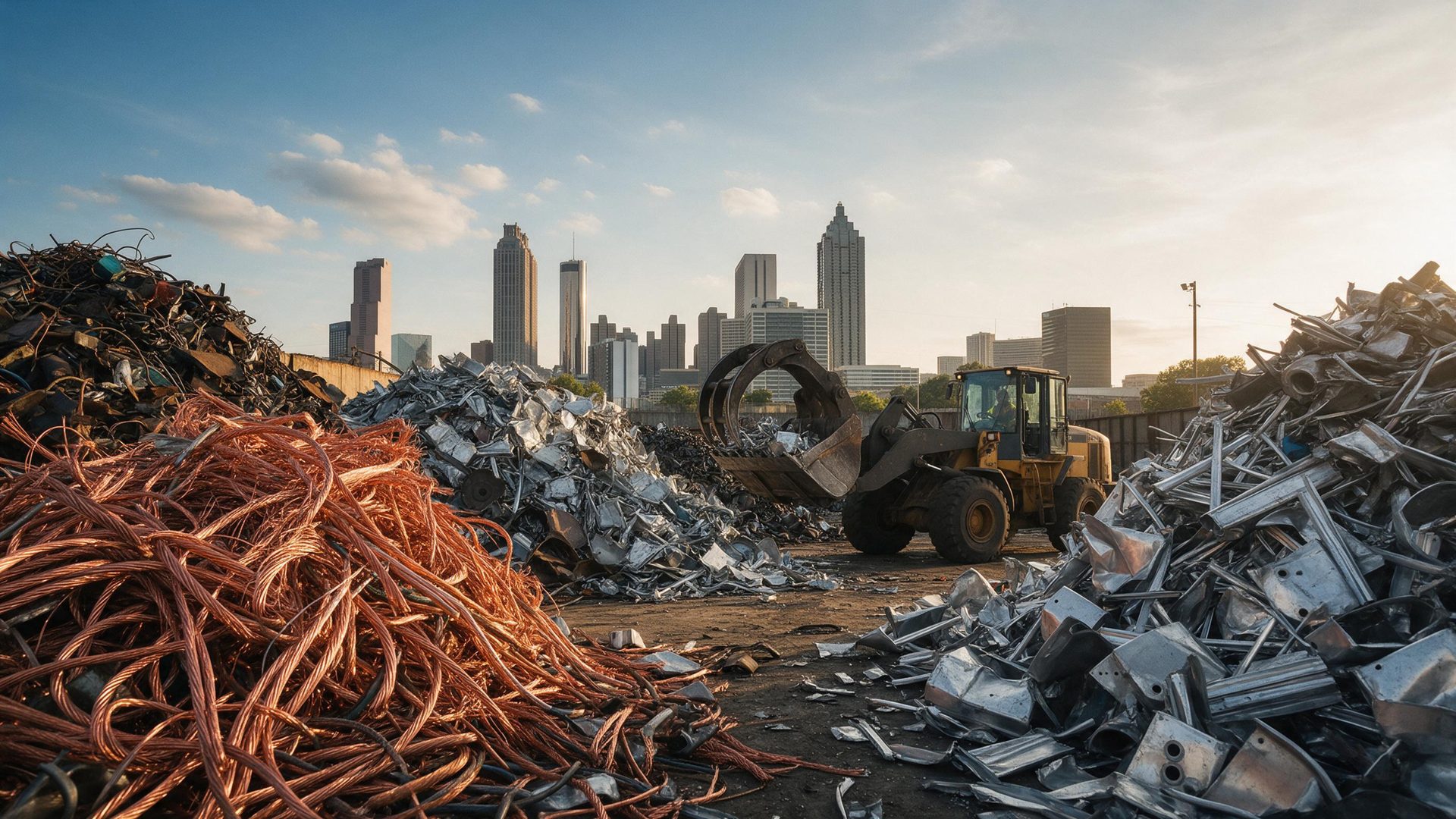
Kennesaw scrap follows the university calendar and the subdivisions
Kennesaw’s rental housing near the university turns over appliances and frames on a semester rhythm. The subdivisions spreading northwest produce a cleaner builder-and-AC pattern. Neither is heavy plant scrap.
A junk car near campus is often a title and a parking-pass problem. A junk car on a subdivision driveway is an HOA letter. Say which, and whether it rolls.
Local prices vary by yard. Send a photo for a quote. We do not publish a Kennesaw scale sheet.
Atlanta Scrap is an independent referral service that connects you with local scrap yards.
Contractor scrap form · Gold and silver · Cash for cars
Kennesaw scrap: sort material before loading
Before mixing a pile, use a magnet to separate likely ferrous metal, such as ordinary steel and iron, from non-ferrous material such as copper, brass, and aluminum. The test is a sorting aid, not a grade guarantee: some stainless steel may not attract a magnet, and attached screws or brackets can affect the result. Keep the two groups apart so a yard can inspect them more easily.
Copper wire and tubing can fall into different grades. Bare bright is clean, uncoated copper wire; #1 copper is generally clean copper with limited attachments; #2 may have more solder, coating, or other contamination. Insulated wire is valued and handled as wire with insulation, not bare copper. Stripping takes time and can damage usable strands, so ask the yard whether the extra labor makes sense for your material.
Keep brass fittings separate from steel valves, plastic, and rubber when practical. For aluminum, avoid combining clean sheet or siding with cast pieces, foil, or material carrying heavy attachments. Dirt, paint, and mixed metals can affect sorting and the grade a yard assigns. Take a few clear photos of each separate pile rather than presenting one close-up of a mixed load.
Kennesaw appliance and vehicle pickup details
Appliances that use refrigerant, including refrigerators and air conditioners, need proper refrigerant recovery before many yards will accept them. Do not cut refrigerant lines or assume a unit is ready because it no longer runs. Ask the receiving yard what preparation or documentation it requires, and arrange recovery through an appropriate service provider if needed. Keep those appliances separate from ordinary steel until acceptance is confirmed.
For a pickup request, list the material types, approximate quantity, and whether items are loose, stacked, or still attached to equipment. Mention access limits, stairs, gates, or a vehicle that cannot roll. Clear a safe path and keep people away from unstable piles. A partner yard can decide whether the load fits its pickup options after reviewing the details; sending a photo is not a confirmed appointment.
Catalytic converters should stay attached to the vehicle unless the yard gives clear instructions otherwise. Their origin and identifying details can matter during a sale, and buyers may ask for vehicle or ownership paperwork. For a junk car, ask the partner yard what title or other documents it needs before arranging removal. Requirements can vary, so do not rely on a general checklist as approval.
Questions
Does a magnet tell me exactly what grade my scrap is?
No. It helps separate many common steel and iron items from non-ferrous metals, but it does not identify an exact grade. Some stainless steel may not be magnetic, and mixed attachments can change how an item behaves. A yard makes the grade decision after inspecting the material.
Is it worth stripping insulated copper wire?
It depends on the wire type, quantity, condition, and time involved. Stripping may produce cleaner copper, but it takes labor and can leave damaged or shortened strands. Never burn insulation to remove it. Keep wire intact and ask the receiving yard how it classifies that material before doing extra work.
Can I put a refrigerator out with other scrap metal?
Do not assume an intact refrigerator is accepted with a regular scrap load. Refrigerant generally needs proper recovery, and many yards have specific acceptance steps for appliances that contain it. Ask the yard before moving or dismantling the unit, and do not cut its lines yourself.
What should I include in photos for a Kennesaw scrap quote?
Photograph each material group separately, with enough distance to show the full pile and a closer view of its condition. Include attachments, insulation, dirt, or other contamination if present. Add a short note about quantity, location on the property, and pickup access so a partner yard can assess the request.
What paperwork should I have for a junk car?
Ask the partner yard what it requires for that vehicle before scheduling removal. A title may be needed, and other ownership or identification documents may be requested depending on the circumstances. Have the vehicle details available and disclose if it does not roll. A photo quote is not confirmation that paperwork is complete.