
Peachtree City piles are usually already in a large garage
Peachtree City houses were built with room, so scrap sits indoors: a water heater, shop offcuts, aluminum from a patio cover, and a car that can actually be photographed in the dry. Paths are for carts, not for shortcut tows. Use the street.
There is little heavy industry. If you describe the load as plant steel, the photo needs to prove it. Most leads here are household, and that is fine.
Local prices vary by yard. Send a photo for a quote. We do not publish a Peachtree City scale sheet.
Atlanta Scrap is an independent referral service that connects you with local scrap yards.
Contractor scrap form · Gold and silver · Cash for cars
Sorting Peachtree City scrap by metal type
A magnet is a quick first check, not a final grade. If it sticks, the piece is likely steel or iron and is ferrous. Copper, brass, and aluminum are non-ferrous and usually do not attract a magnet. Some items combine metals, coatings, or fasteners, so separate what is easy to identify and leave uncertain pieces for the yard to inspect.
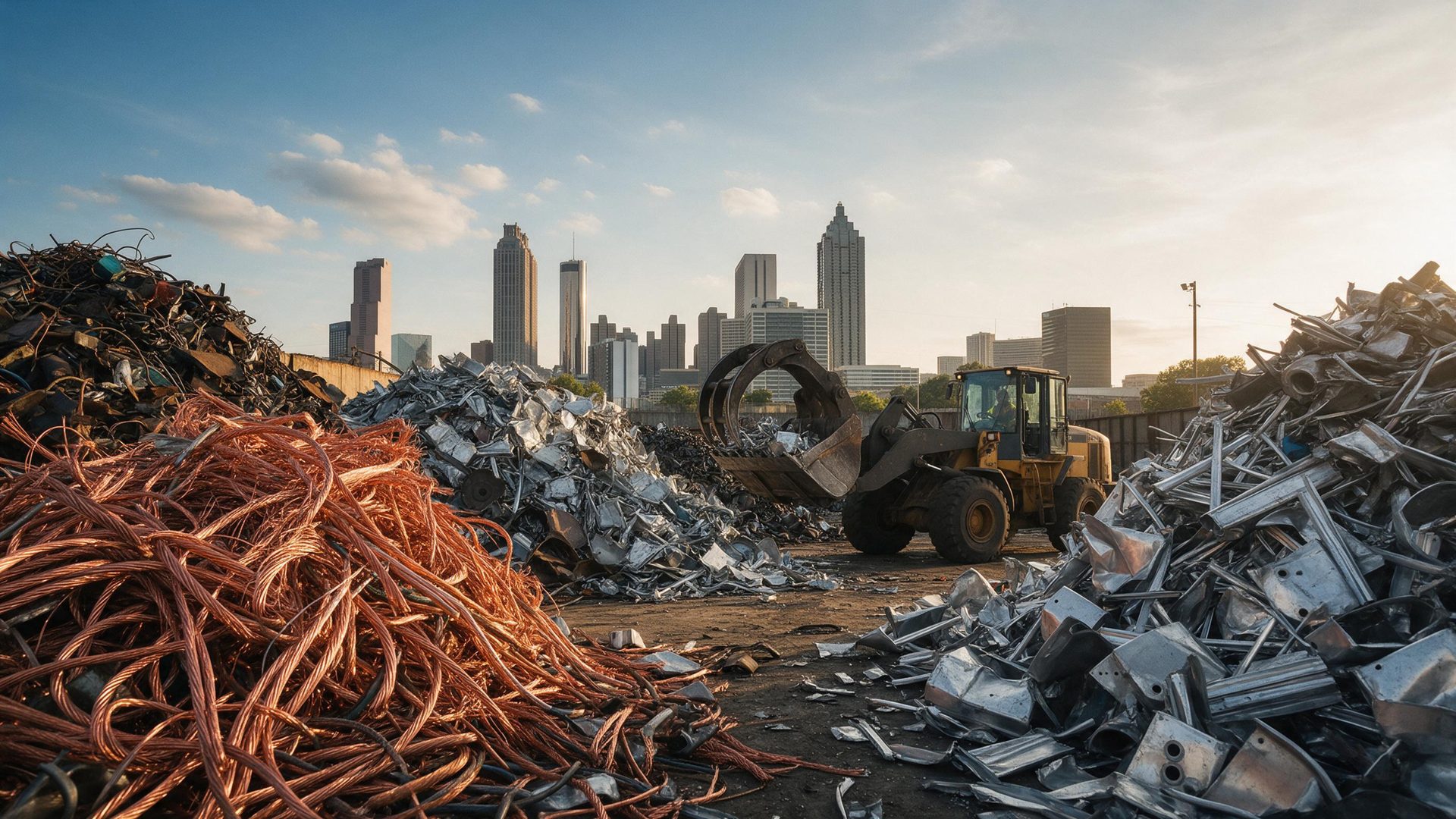
Copper grades can affect how a yard classifies a load. Bare bright is clean, uncoated copper wire; #1 is generally clean copper with limited attachments; #2 may include solder, heavier oxidation, or other allowed contamination. Insulated wire is graded separately. Yard definitions differ, so keep wire types apart rather than describing every copper-colored cable as the same grade.
Brass plumbing pieces and aluminum are also worth keeping separate from steel. Aluminum may be sorted by form, such as clean sheet, cast pieces, or material with attached steel. Dirt, screws, plastic, and rubber can make a load less clean. Removing attachments can help, but do not spend hours dismantling a small pile before asking how the partner yard grades it.
Preparing a Peachtree City pickup safely
Do not burn insulation off wire. Burning creates hazardous smoke and can leave damaged metal that a yard may classify differently. Stripping by hand or machine takes time and can expose sharp strands; compare the effort with the value of keeping the wire insulated. Keep different wire types in separate containers, and avoid mixing them with copper plumbing or brass fittings.
Refrigerators, freezers, and air conditioners contain refrigerant that must be properly evacuated before processing. Do not cut lines or release refrigerant. Ask the yard how it handles appliances and whether it accepts them in their current condition. For a pickup, have a clear route to the items and tell the yard about stairs, tight access, or pieces that need equipment to move.
For a vehicle, ask the partner yard what ownership documents it requires before setting a pickup time. Title and paperwork requirements can depend on the vehicle and the yard's process. A catalytic converter may need separate identification or documentation; do not assume it will be priced or accepted as loose general scrap. The partner yard handles inspection, weighing, payment, and any required ID checks.
Questions
How should I take photos of a mixed scrap load?
Take a wide photo showing the full load, then close views of the main metal types and any labels or attachments. Keep copper, brass, aluminum, and steel visually separate when practical. Photos help a partner yard assess what to ask next, but they do not replace inspection or the yard’s final grade.
Can I put steel and copper in the same container?
Keeping them separate is usually better. It makes the load easier to identify and reduces the chance that steel, dirt, or other material is treated as contamination in a non-ferrous pile. If items are already mixed or attached, show that clearly and ask the yard how it wants them presented.
Should I remove insulation from copper wire before selling it?
Not automatically. Stripping takes labor and produces sharp wire ends, while insulated wire can be accepted as its own category at some yards. Never burn insulation. Ask the partner yard how it grades the wire you have, then decide whether stripping is worthwhile for that specific material.
What should I do before arranging a junk-car pickup?
Ask the partner yard which title or ownership documents it needs, and confirm that the vehicle can be accessed for loading. Share whether it rolls, steers, or has missing parts. Remove personal belongings and tell the yard about a catalytic converter or other separated components instead of assuming they are included.
Does Metro Photo Quotes buy or weigh the scrap?
No. The site connects sellers with independent partner yards and does not buy scrap itself. A partner yard confirms what it accepts, inspects and weighs the material, and handles payment and any ID or paperwork checks. There is no published Peachtree City price sheet; the yard determines its offer.