
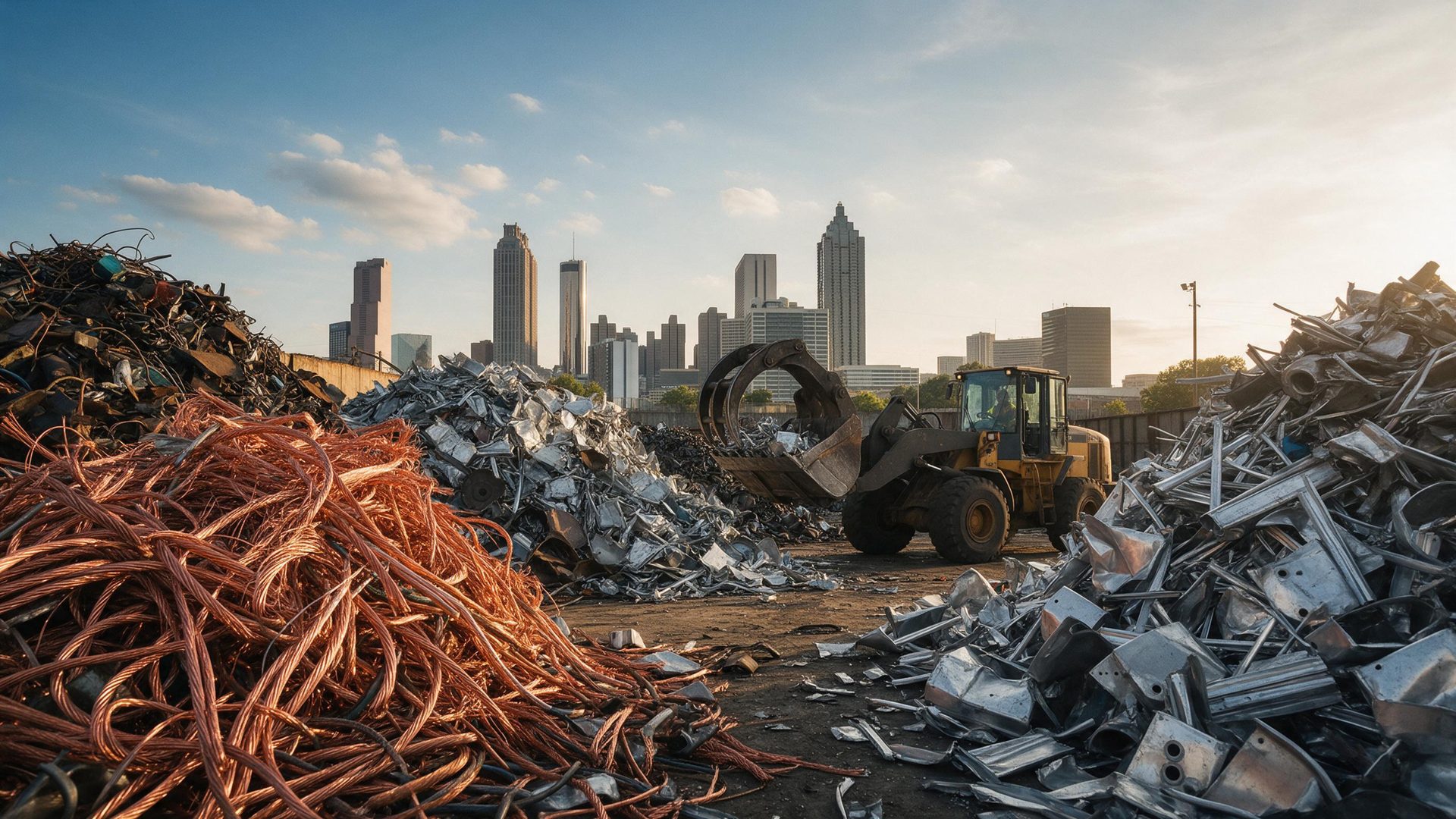
Roswell’s old streets and its newer subdivisions scrap differently
Near Roswell’s historic core and the Chattahoochee, renovations open older houses and small commercial spaces. Copper and fixtures come out in small, careful loads. Farther out, later subdivisions look like the rest of north Fulton: HVAC line, studs, and a condenser.
The river roads are narrow. If the address is on a hill with no turnaround, say so before a yard sends a long truck for a short pile of pipe.
Local prices vary by yard. Send a photo for a quote. We do not publish a Roswell scale sheet.
Atlanta Scrap is an independent referral service that connects you with local scrap yards.
Contractor scrap form · Gold and silver · Cash for cars
Sorting Roswell scrap before a yard quote
A magnet is a quick first check, not a full grade test. If it sticks, the piece is usually ferrous steel or iron; if it does not, it may be copper, brass, aluminum, or another material. Keep magnetic pieces separate from non-ferrous metal. Plated parts, attached screws, and mixed assemblies can make an otherwise simple pile harder to grade.
Copper is commonly sorted as bare bright, #1, #2, or insulated wire. Bare bright is clean, uncoated copper wire; #1 and #2 categories allow different amounts of solder, oxidation, or attached material. Yard definitions can differ, so keep clean pipe, fittings, and wire apart rather than assigning a grade yourself. A partner yard can confirm how it will classify a photo or load.
Do not put every light-colored metal together. Aluminum cans, siding, cast pieces, and extrusion may be treated as separate grades. Brass is also worth separating from steel valves, plastic handles, or mixed plumbing parts when that can be done safely. Clean material is easier to inspect; dirt, wet debris, insulation, and other attachments can affect how a yard accepts or grades it.
Planning a Roswell scrap pickup safely
Before requesting a pickup, photograph the material from a few angles and show anything that may change loading, such as a narrow approach, slope, gate, or limited place to turn. Give an honest description of the pile and whether it is mixed or sorted. The website connects sellers with independent partner yards; the yard confirms acceptance, access, weighing, and payment details directly.
Keep the pickup area stable and clear. Do not stack heavy metal where it could fall, and avoid reaching into piles with sharp edges or protruding fasteners. Wear sturdy gloves and eye protection when sorting, and do not cut sealed containers or unknown equipment. If an item is too heavy or awkward to move safely, leave it for the yard to assess rather than trying to lift it alone.
Some appliances contain refrigerant that must be properly evacuated before the unit is handled as scrap. Do not cut refrigerant lines or remove parts to make the appliance smaller. Ask the yard whether it accepts the item and what condition it requires. For a junk vehicle, ask in advance about title and identification paperwork; requirements can vary by yard and situation.
Questions
How can I tell ferrous metal from non-ferrous metal?
Try a magnet on a clean area. A strong attraction usually indicates iron or steel, while copper, brass, and aluminum generally will not attract a magnet. This is only a sorting aid: coatings, mixed assemblies, and attached steel can mislead. Keep uncertain pieces separate and let the partner yard confirm the grade.
Should I sort copper by type before asking for a quote?
Yes, when it is practical and safe. Keep bare bright wire, clean copper pipe, soldered or coated copper, and insulated wire in separate groups. Yard grading rules are not identical, so do not assume a category from appearance alone. Clear photos and a brief description help the yard decide what information it needs.
Is stripping insulation from copper wire worth doing?
It depends on the wire and the time and effort involved. Stripping may expose cleaner copper, but it can be labor-intensive, and some wire is better accepted insulated. Never burn insulation, and do not use unsafe cutting methods. Ask the partner yard how it grades that wire before spending time preparing it.
Can I scrap a refrigerator or air conditioner as-is?
Ask the yard before arranging transport. Refrigerant-containing appliances may need proper evacuation by a qualified service provider before scrap handling, and acceptance rules can vary. Do not cut lines, vent refrigerant, or dismantle a sealed system yourself. Include the appliance type and condition in the photos or description.
What paperwork should I have for a junk car or catalytic converter?
Ask the partner yard what it requires before pickup. Title requirements for a vehicle can vary with the circumstances, and the yard may request identification or other documents. Catalytic converters can also require identification or paperwork; do not remove or sell one without confirming the yard’s process and the vehicle documentation it needs.