
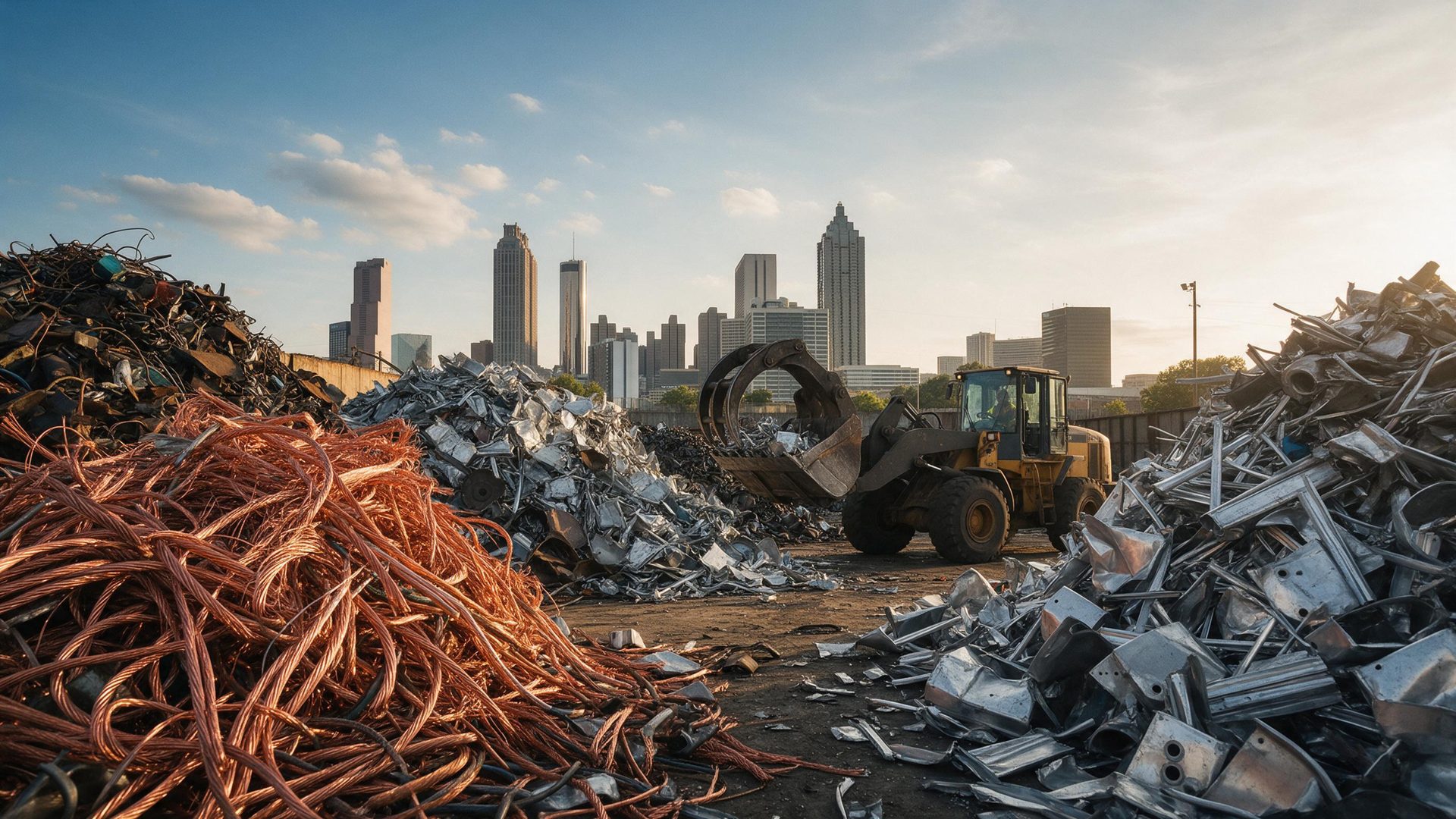
East Point still has shop buildings, and the houses are older
East Point’s industrial and airport-adjacent streets produce shop steel, mixed metal, and vehicles that a business parked and forgot. Access can mean a fence, a dog, and a lot that floods in a hard rain. Photos of the gate and the ground help.
The houses are older southside stock. A repipe here is real copper, usually a small load, and it should not be buried under the shop steel from a different address. Airport-area traffic makes the pickup window part of the request, not an afterthought.
Local prices vary by yard. Send a photo for a quote. We do not publish a East Point scale sheet.
Atlanta Scrap is an independent referral service that connects you with local scrap yards.
Contractor scrap form · Gold and silver · Cash for cars
Sorting scrap metal in East Point before pickup
A mixed pile can be harder to price than separate material. Keep steel and other likely ferrous items apart from copper, brass, and aluminum. A magnet is a quick first check: it usually sticks to ordinary steel and iron, but not to copper, brass, or aluminum. It is only a sorting aid, not a grade test. Coatings, attached parts, and contamination can still affect how a yard evaluates a load.
Copper from an older-house repair may have different value depending on its condition. Bare bright wire is clean, uncoated copper with insulation and fittings removed. #1 copper is generally clean copper pipe or wire without solder or heavy attachments; #2 is more likely to have solder, paint, or other contamination. Insulated wire is a separate grade. Keep these types apart and let the partner yard confirm its grading rules.
Brass valves and fittings are easier to assess when separated from steel handles, plastic, and rubber. Aluminum also has distinct forms, such as clean sheet or extrusions and cast pieces, and mixed or attached material may be graded differently. Dirt, wet debris, and non-metal parts can lower the usable metal content. Do not spend time cleaning every item before asking whether the yard wants it prepared that way.
East Point pickup planning for appliances and junk cars
Before arranging appliance removal, identify whether the item may contain refrigerant, such as a refrigerator, freezer, or air conditioner. Refrigerant needs proper evacuation by a qualified service provider before the appliance is processed. Do not cut lines or release refrigerant yourself. Ask the partner yard what condition it accepts and whether evacuation must be arranged before pickup; acceptance and preparation requirements can vary.
For a junk car, have the vehicle details and title status ready when requesting a quote. Title and paperwork requirements can depend on the vehicle and the partner yard, so confirm them before setting a pickup time. If the title is missing, say so early rather than assuming the car can be collected. A catalytic converter may be assessed separately, and the yard may request identification or other paperwork for it.
Make the pickup request easier to evaluate with clear photos of the material, the vehicle or appliance, and the route from the street to the load. Mention whether items are dismantled, mixed with debris, or behind a locked gate. Keep people and pets away from sharp edges, unstable stacks, and vehicle fluids. Confirm access, loading arrangements, and the pickup window directly with the partner yard before moving heavy items.
Questions
Does a magnet tell me what a metal item is worth?
No. A magnet can help separate many steel and iron items from non-ferrous metals, but it does not identify the exact alloy or grade. Some items have mixed parts, coatings, or attachments that change how they are sorted. Send a clear photo and let the partner yard explain how it will classify the material.
Should I strip insulation off copper wire before asking for a quote?
Not automatically. Bare wire may be graded differently from insulated wire, but stripping takes time and can create sharp waste. Ask the partner yard how it handles the wire you have and whether stripping is worthwhile for that load. Never burn insulation off; it creates harmful smoke and can damage the copper.
Can I include an old refrigerator with my scrap metal?
Ask first and describe the appliance. Refrigerant must be properly evacuated by a qualified service provider, and the yard may require that step before accepting it. Do not cut refrigerant lines or assume the appliance can go with an ordinary metal load. Confirm acceptance and preparation requirements before arranging transport.
What paperwork should I have for a junk car pickup?
Have the vehicle information and any title or ownership documents available when you request a quote. Requirements can vary, so ask the partner yard what it needs before scheduling. If paperwork is missing or the vehicle is not in your name, explain that at the start; do not assume the yard can accept it.
How should I prepare a shop lot for a scrap pickup?
Separate metal from general debris where practical, and point out anything that is wet, attached, or difficult to reach. Send photos showing the load and access route. Tell the yard about gates, narrow approaches, or other pickup constraints, then confirm who will load the material and what needs to be moved beforehand.