
Marietta still has shop steel and pre-subdivision houses
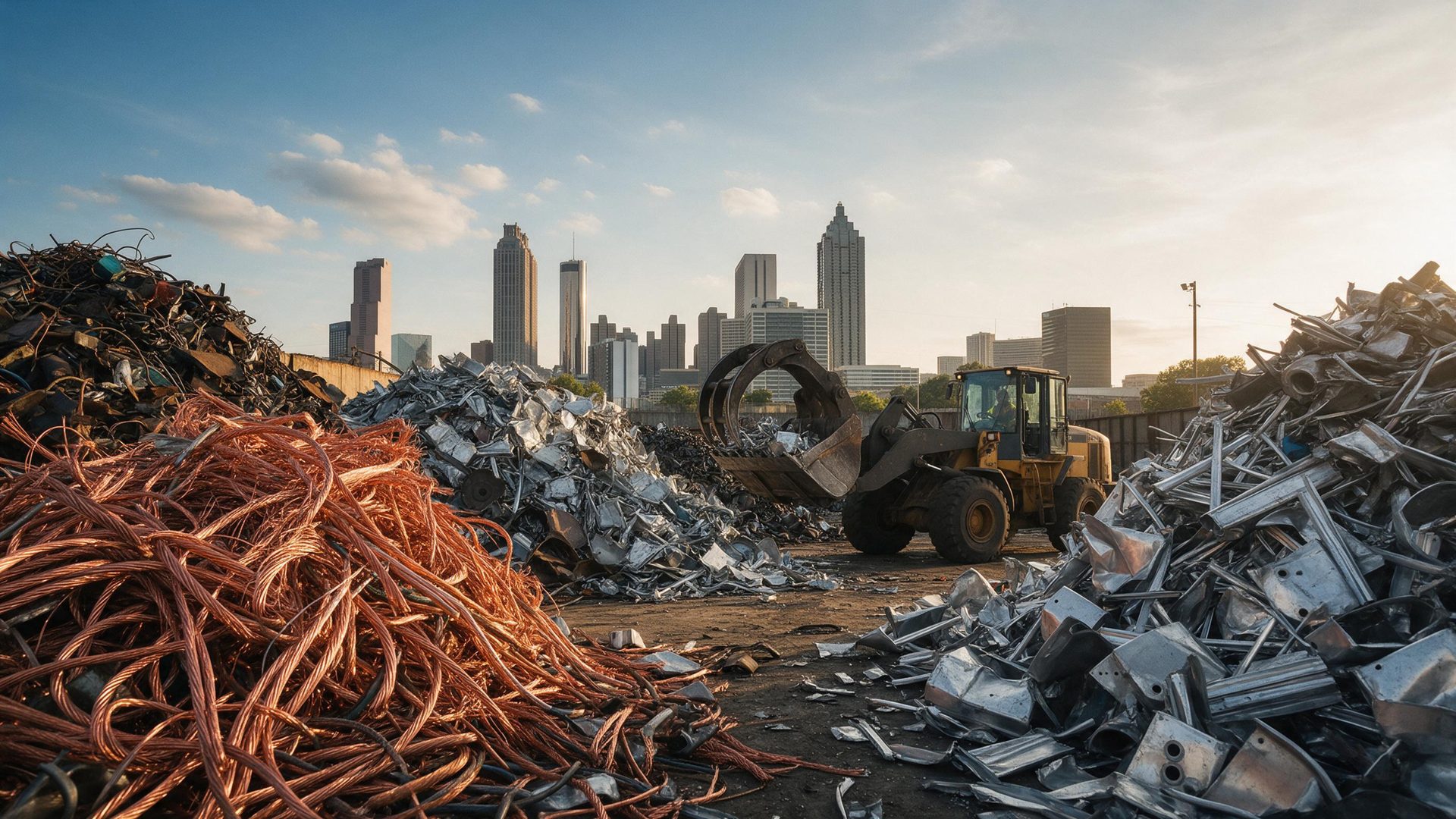
Marietta’s square and the streets around it remodel older houses: copper, plaster, and brass, on lots with mature trees and limited trailer swing. A few miles toward the industrial and Dobbins side, the scrap is shop steel, machine bases, and vehicles that a business finally wants out of the yard.
Those are different trucks. A Saturday house call and a weekday shop cleanout should not share one vague note that just says Cobb County.
Local prices vary by yard. Send a photo for a quote. We do not publish a Marietta scale sheet.
Atlanta Scrap is an independent referral service that connects you with local scrap yards.
Contractor scrap form · Gold and silver · Cash for cars
Marietta copper, brass, and sorting by grade
For a Marietta cleanout, a magnet is a quick first check, not a complete grade test. It usually sticks to ordinary steel and iron, while copper, brass, and aluminum are non-ferrous. Some stainless steel is weakly magnetic or not magnetic, so do not identify a metal from the magnet alone. Keep uncertain pieces separate and show clear photos so a partner yard can assess the material.
Copper grades can change how a yard evaluates a load. Bare bright is clean, uncoated copper wire with no attachments; #1 and #2 copper allow more oxidation, solder, paint, or fittings under yard grading rules. Insulated wire is assessed with its insulation in place. Do not assume that removing insulation will improve the return: stripping takes time, and the exposed copper still has to meet the yard’s grade requirements.
Brass from valves and plumbing fittings is worth keeping apart from copper and steel. Remove obvious plastic, rubber, and steel attachments when they come off easily, but do not risk damaging a fitting to chase a small amount of metal. Aluminum also has different forms, such as clean sheet, cast parts, and mixed pieces. A photo and a short note about coatings or attachments help explain what is actually in the pile.
Marietta shop steel, appliances, and pickup preparation
Shop steel is usually ferrous, but a pile of clean steel is not the same as mixed equipment. Separate loose steel from motors, concrete-covered bases, sealed containers, and material with oil or other residue. Heavy machine bases may need a different loading plan than manageable loose pieces. Ask the partner yard what it can accept and how it wants unusual or attached material described before arranging transport.
Refrigerators, freezers, and air conditioners contain refrigerant that must be properly evacuated before the appliance is processed as scrap. Do not cut refrigerant lines or remove components yourself. Tell the yard what type of appliance you have and whether it is intact; ask how it handles refrigerant-containing equipment. Other appliances can also have cords, motors, or mixed materials that affect sorting and acceptance.
Before a pickup, gather the material in an accessible spot, keep it clear of vehicles and other obstacles, and send photos that show the whole load and close-ups of unusual items. Describe approximate dimensions and whether anything is attached or difficult to move. Wear gloves and eye protection when sorting, and do not handle sharp, oily, or heavy pieces beyond your ability. A partner yard sets acceptance, weighing, payment, and any required identification steps; this site connects sellers with yards and does not buy scrap itself.
Questions
Does a magnet tell me exactly what kind of metal I have?
No. A magnet helps separate many common steel and iron items from non-ferrous metals, but it does not establish an exact grade. Some stainless steel responds weakly or not at all. Keep uncertain pieces separate, avoid mixing them into a clean pile, and include a close photo when requesting an assessment.
Should I strip insulation from copper wire before asking for a quote?
Not automatically. Yards commonly distinguish bare bright, #1, #2, and insulated wire, and grade depends on cleanliness and condition. Stripping takes labor and can create sharp waste. Ask the partner yard how it classifies your wire before spending time on it; the yard makes the final grade decision.
Can I put an old refrigerator in a metal scrap pile?
Tell the yard that it is a refrigerator or other refrigerant-containing appliance before arranging pickup. Refrigerant needs proper evacuation, so do not cut lines or remove sealed parts yourself. Ask whether the yard accepts the appliance intact and what preparation, if any, it requires.
What should I have ready for a junk car pickup?
Have the vehicle’s location, condition, and available title information ready, and tell the yard if it is missing keys or cannot roll. Title and paperwork requirements can depend on the vehicle and the yard’s process, so confirm directly with the partner yard before scheduling. The yard handles payment and any required identification.
What should I know before removing a catalytic converter?
Do not remove a converter before asking the yard about its acceptance and required paperwork. Identification or ownership documents may be required, and rules or yard procedures can differ. Keep the converter’s identifying information intact and confirm what the yard needs rather than relying on an assumed value or grade.