
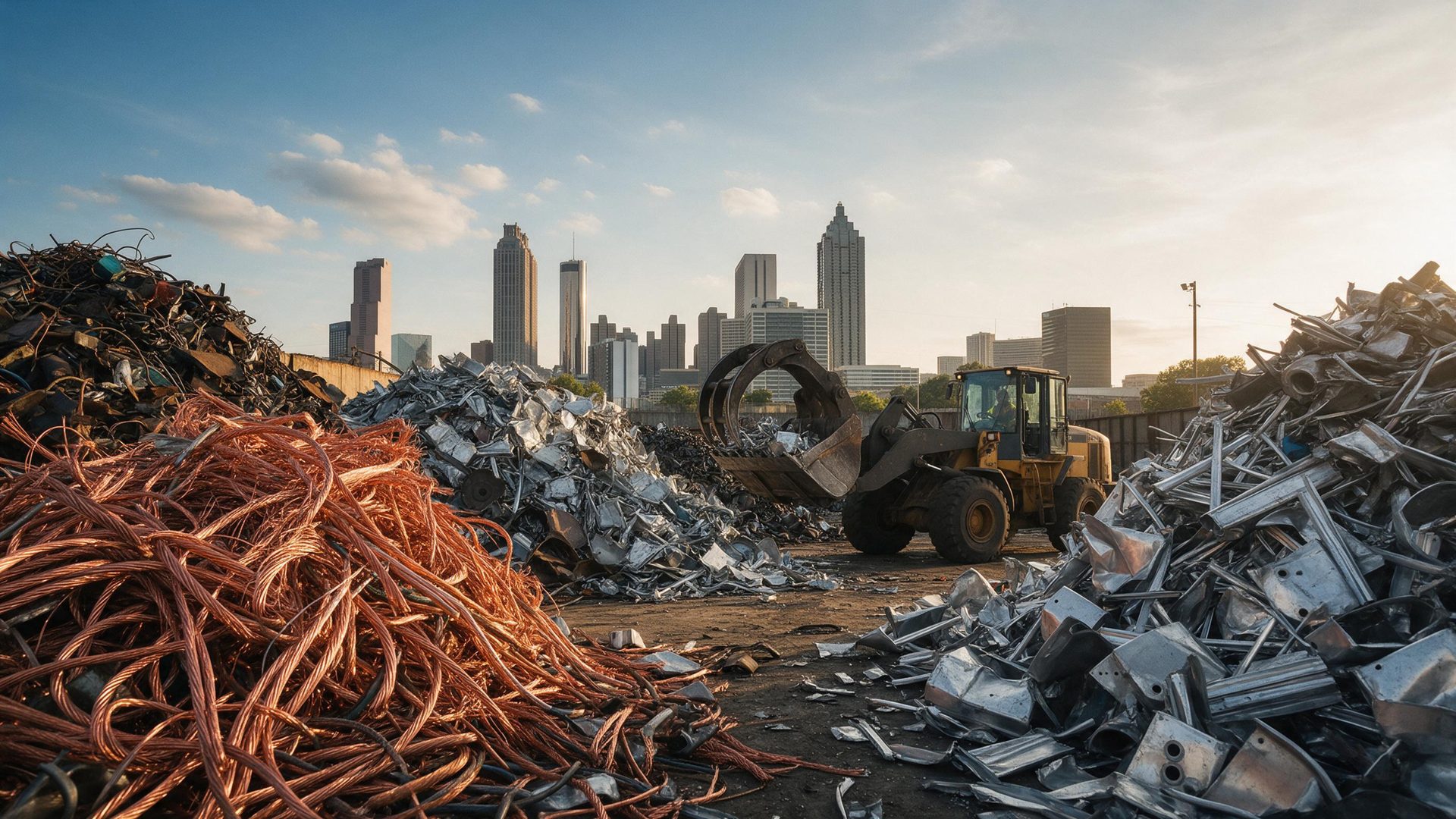
Dunwoody is Perimeter cable plus established houses
Dunwoody’s office inventory around Perimeter refreshes in chunks of cable, pedestal floor, and light steel. That material needs a loading dock and permission. The houses, many from the 1970s, are a separate copper-and-appliance lead on a residential street that a dock truck should not be sent to.
Downsizing moves here also surface jewelry and flatware. Use the gold page for those. They are not a reason to call a cable pull “mixed precious metal.”
Local prices vary by yard. Send a photo for a quote. We do not publish a Dunwoody scale sheet.
Atlanta Scrap is an independent referral service that connects you with local scrap yards.
Contractor scrap form · Gold and silver · Cash for cars
Sort Dunwoody office metal before arranging a pickup
For an office cleanout near Perimeter, separate metal from carpet, wood, ceiling tile, and general demolition debris before sending photos. A magnet is a quick first check: it usually sticks to steel and iron, but not to copper, brass, or aluminum. It is only a sorting aid, not a grade test; some stainless steel may also respond to a magnet.
Keep cable separate from loose steel and other non-ferrous metal. Copper value depends on condition and grade: bare bright is clean, uncoated copper wire; #1 and #2 copper allow more contamination or oxidation; insulated wire still has its insulation. A yard decides the grade after inspection. Do not assume that removing insulation pays: stripping takes time, and the resulting wire still needs to meet the yard’s grade requirements.
Clean material is easier to identify than metal mixed with drywall dust, fasteners, plastic, or wet debris. Keep separate containers or piles for cable, steel, and other metals, and note what is included in each photo. For an office site, confirm access and loading-dock permission with the property contact before arranging any collection. The yard needs to know what it can safely reach and load.
Dunwoody home cleanouts: appliances, access, and safe handling
For a house cleanout, show appliances separately from copper plumbing and other metal. Refrigerators, freezers, and some air conditioners contain refrigerant that must be properly evacuated before scrap processing. Do not cut refrigerant lines or remove components yourself. Ask the receiving yard what condition it accepts and whether it can direct you to an appropriate service for equipment that still needs evacuation.
Brass fittings and aluminum parts can be worth separating from a mixed pile, but dirt, attached plastic, steel screws, and other materials can affect how a yard grades them. Aluminum is not one uniform category: clean sheet or extrusion is different from cast pieces or material with attached steel. Keep obvious types apart when practical, and send clear photos rather than guessing at a grade.
Before a pickup, gather the material in an accessible place without blocking a driveway or walkway. Tell the yard about stairs, narrow gates, parked vehicles, or any need to enter a building; do not assume loading help or a particular truck is available. Wear gloves and sturdy shoes, and leave sharp, unstable, or heavy items for trained handlers. A partner yard inspects and prices the metal; this site connects you with yards and does not buy it.
Questions
How can I tell whether a pile is steel or non-ferrous metal?
A magnet is a useful first check: it commonly sticks to iron and steel, while copper, brass, and aluminum usually do not attract it. Test a clean spot, since coatings or mixed attachments can mislead. The magnet cannot establish the scrap grade, so keep uncertain pieces separate and let the yard inspect them.
Should I strip insulation from copper wire before sending photos?
Not automatically. Stripping can take substantial time, and insulated wire is often sorted and priced as its own material category. Whether stripping makes sense depends on the wire and the yard’s grading rules. Photograph the wire as it is, describe whether it is insulated, and ask the partner yard how it wants it prepared.
Can a refrigerator or air conditioner go directly into a scrap pile?
Do not cut refrigerant lines or remove refrigerant components to prepare an appliance for scrap. Equipment containing refrigerant needs proper evacuation before processing. Ask the receiving yard what it accepts and what preparation is required. If the unit still needs evacuation, arrange appropriate service rather than treating it as ordinary loose metal.
What should I include in photos for a Dunwoody office cleanout?
Send a wide view showing the amount and access route, plus closer photos of cable, steel, and other separated materials. Include any loading-dock or entry constraints and say whether the property contact has approved access. Photos help a yard assess the request, but final grades and payment terms come from the yard.
Do vehicle titles or catalytic converters need special handling?
For a junk vehicle, ask the yard what ownership documents it requires before arranging pickup; title requirements can depend on the vehicle and situation. Do not remove or sell a catalytic converter as anonymous loose metal. Yards may require identification and paperwork for converter transactions, so confirm their process first.